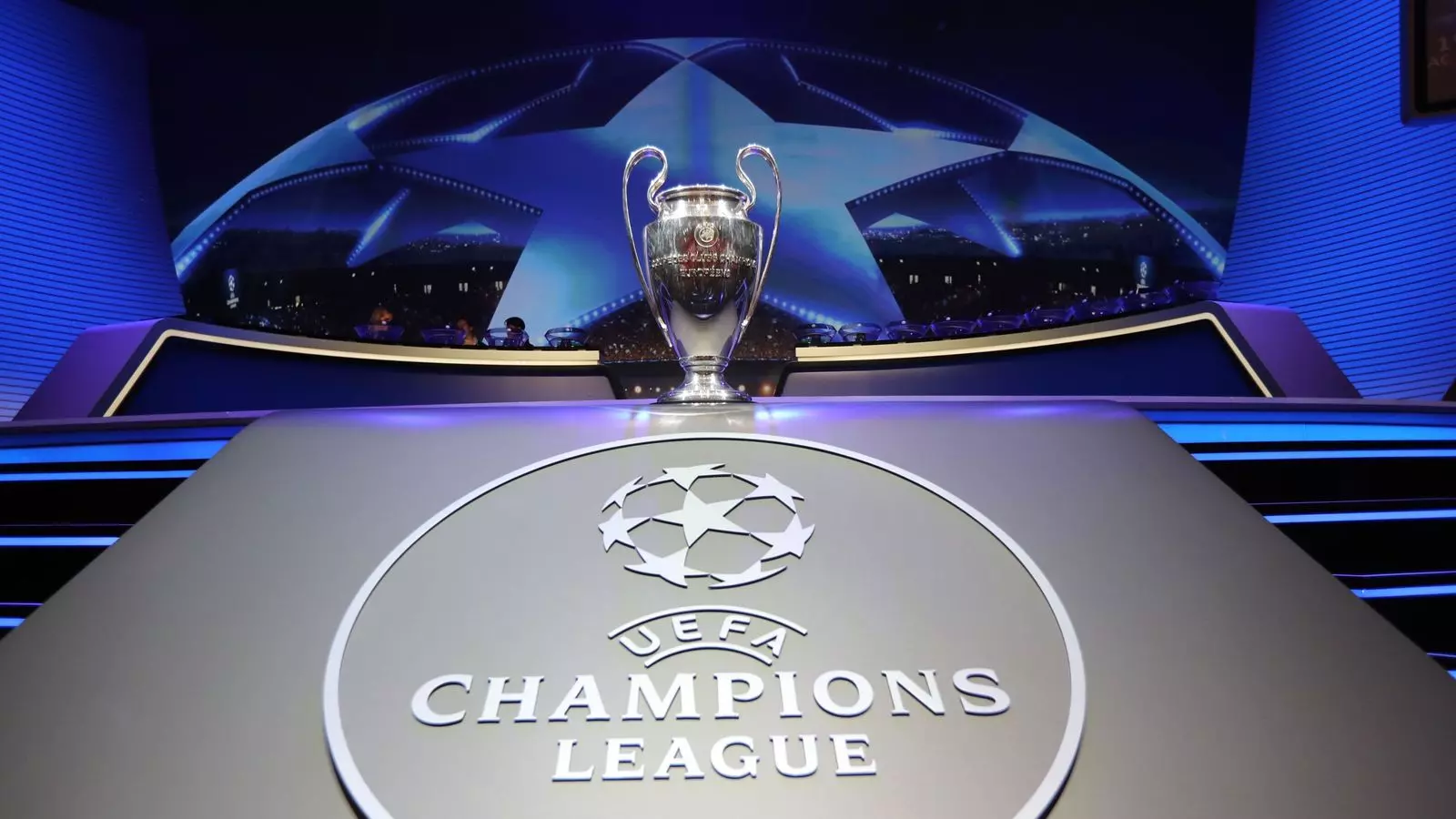
Die Meister, Die Besten, Les grandes équipes, The champions.
To the strains of the iconic Champions League anthem, those words will once again echo around Europe’s biggest stadiums over the next few months. Europe’s premier club competition is back – bringing with it another season of elite clubs, rising stars, old rivalries and the relentless pursuit of football’s biggest prize.
The 2026–27 UEFA Champions League will be the 72nd season of Europe’s premier club competition organised by UEFA, and the 35th since the tournament was rebranded from the European Cup to the UEFA Champions League.
The league phase begins on 8 September 2026 and runs until 27 January 2027, with 36 teams competing for 24 places in the knockout phase. The knockout rounds will then take place between 16–17 February and 5 June 2027, when the final will be played at Madrid’s Metropolitano Stadium – the venue for the Champions League final for a second time after 2019.
Before looking ahead, however, it is worth remembering how memorable the previous campaign was. Paris Saint-Germain and Arsenal met in the 2025–26 final, with the French champions eventually prevailing 4–3 on penalties after a 1–1 draw following extra time. Across 189 matches, 655 goals were scored – an average of 3.47 per game – while average attendance reached 44,326.
Real Madrid’s Kylian Mbappé finished as top scorer with 15 goals, while PSG’s Khvicha Kvaratskhelia was named the tournament’s best player and Real Madrid youngster Arda Güler took the award for best young player.
PSG now enter the new campaign as two-time defending champions. The question is whether Luis Enrique’s side can go one step further and become only the second team in the Champions League era to win the competition three years in a row. A third straight final would also put PSG alongside Milan (1993 to 1995), Juventus (1996 to 1998) and Real Madrid (2016 to 2018, all of them won), the only other clubs to have reached three consecutive finals since the competition was rebranded.
According to Opta’s supercomputer, though, the defending champions are not the favourites.
Arsenal lead the pre-season projections, with Mikel Arteta’s side winning 21.2% of simulations. Bayern Munich are close behind at 19.9%, while Manchester City are the only other team given more than a 10% chance, at 12%. PSG rank fourth with a 7.7% probability of lifting the trophy for a third consecutive season.
Those numbers only add to the intrigue, because the leading contenders will have plenty of opportunities to test each other before the knockout rounds even begin.
One of the biggest attractions of the league phase will be the meeting between PSG, Manchester City and Barcelona.
City host PSG on 14 October, a fixture that brings back memories of their most recent encounter in 2025, when PSG came out on top (4-2).
Six days later, PSG welcome Barcelona. The two sides will meet for a third consecutive year, with PSG having won their previous two encounters – and, notably, both victories came in away (4–1 and 2–1).
Then, on 8 December, Barcelona host Manchester City. Their last meeting in European competition came back in 2016, when City emerged victorious (3-1).
For Manchester City, that fixture will have an added emotional dimension. Director of Football Hugo Viana is looking forward to seeing former City legends Rodri and Kevin De Bruyne again, with both now at different clubs. “We are really happy that we face Barcelona with Rodri there, we are happy to see him again,” Viana said. “Barcelona is always tough, especially away. And also Napoli that we played last year and we had the pleasure to have Kevin on the field and it will be amazing to see him again.”
Asked about the competition as a whole, Viana summed up the challenge simply: “It’s always difficult, different games, different coaches, different systems. But what I can guarantee is that we are ready to compete and let’s see.”
There will be plenty of other heavyweight clashes.
Bayern Munich face Arsenal on 21 October, with Arsenal having won (3-1) their most recent meeting in 2025.
Arsenal then welcome Real Madrid on 9 December – another intriguing rematch, particularly because the Gunners have never lost to the Spanish giants in their four previous meetings.
Manchester United and Bayern Munich will renew one of European football’s most famous rivalries on 20 January 2027. Their history inevitably recalls the dramatic 1999 final, while their most recent meetings came in 2023, when Bayern won their previous three encounters.
While the biggest clubs will dominate the headlines, the 2026–27 competition will also bring plenty of fresh faces and new stories.
Real Betis return to the Champions League for the first time since 2005–06. Como, LASK, Sabah and Viking are set to make their debut appearances since the introduction of the group stage or league phase, with Como reaching European football for the first time in their history. Azerbaijan’s Sabah will also make their debut in a major UEFA competition group or league phase.
Norway will have two clubs in the main stage for the first time since 1999–2000, while Turkey will have two representatives in the main phase for the first time since 2007–08.
Elsewhere, Real Madrid are set to extend their record run to 30 consecutive Champions League seasons, having featured in every edition since 1997–98.
The individual records could be just as captivating as the team battles.
Bernardo Silva, who holds the record for the longest unbeaten run in Champions League history at 26 consecutive matches between 2018 and 2021 with Manchester City, will now seek European success in Real Madrid colours.
Dani Carvajal, meanwhile, has left Real Madrid. The defender has won the Champions League title six times – one of only five players to reach that total – and remains without a club. His former Madrid teammate Lucas Vázquez, a five-time Champions League winner, will continue his own European adventure with Bayer Leverkusen as they attempt to challenge the continent’s elite.
Bayern Munich goalkeeper Manuel Neuer is closing in on the Champions League record for wins. His 107 victories in the competition put him within reach of his former teammate Thomas Müller’s 111 and Cristiano Ronaldo’s 115.
Neuer also enters the season with 161 Champions League appearances. With Müller and Lionel Messi both on 163, he is within touching distance of moving past them. Iker Casillas’ 177 is the next landmark, although Cristiano Ronaldo remains the all-time leader with 183 appearances.
At the other end of the pitch, the goalscoring race promises to be just as compelling.
Mbappé already has 70 Champions League goals and could overtake Real Madrid legend Raúl, who has 71, to break into the competition’s all-time top five.
Manchester City striker Erling Haaland has 57 goals, while Bayern’s Harry Kane has 54. Haaland’s numbers are particularly remarkable: his Champions League goals-per-game ratio stands at an extraordinary 0.98, highlighting just how prolific he has been in the competition. When it comes to the all-time scoring chart, however, there is still a long way to go for the Norwegian, with Cristiano Ronaldo’s 140 goals setting the benchmark.
Among the younger generation, all eyes will once again be on Lamine Yamal. The Barcelona forward has already rewritten the Champions League record books: he became the youngest player to start a match in the competition at 16 years and 83 days against Porto in October 2023, and later became the youngest player to score and assist in the same Champions League match, doing so against Benfica at the age of 17 years and 241 days.
Now Yamal has an even bigger target – winning his first major international club trophy with Barcelona.
He will share the dressing room with another extraordinary figure in Rodri. The midfielder, who joined Barcelona after his Manchester City years, is one of only four players to have won the UEFA Champions League, the FIFA World Cup, the UEFA European Championship and the Ballon d’Or. His experience could prove invaluable as Barcelona chase European glory for the first time after 2015.
Another player arrives with a unique achievement of his own. Fabián Ruiz became one of just 12 players to win both the UEFA Champions League (and European Cup) and the FIFA World Cup in the same calendar year, accomplishing the feat in 2026 with PSG and Spain.
And then there are the managers, whose ambitions and histories provide another layer to the competition.
Luis Enrique already has three Champions League titles as a coach – with Barcelona (2014–15) and PSG (2024–25 and 2025–26). Another triumph would take him closer to Carlo Ancelotti’s record five titles and strengthen his place among the competition’s managerial greats.
José Mourinho is looking to add another chapter to his Champions League story. Having previously competed in the competition with seven different clubs and won the trophy with Porto (2003–04) and Inter Milan (2009–10), Mourinho will now try to reproduce that success with Real Madrid. He could not do so during his first spell in Madrid between 2010 and 2013.
In Madrid, another long-serving coach is dreaming of redemption. Diego Simeone is in his 15th year at Atlético Madrid and has already lost two Champions League finals. With this season’s final set to be played at Atlético’s own Metropolitano Stadium, a third final appearance would give Simeone a chance to break that particular curse on home turf.
Massimiliano Allegri also brings considerable Champions League experience. After managing Milan and Juventus in the competition, including 100 Champions League matches, he now takes charge of Napoli with the ambition of taking the Italian side deep into Europe once again.
After months of anticipation, fierce competition and nights that will shape the season, everything will eventually come down to one final game. The pressure will be at its highest, the margin for error at its smallest, and the reward greater than anything that came before.
When the final takes place at the Metropolitano Stadium on 5 June 2027, we will have the answer to the question of which team will hear those words for the final time this season.
Die Meister. Die Besten. Les grandes équipes. The champions.