LOS ANGELES. : When Iran begin their World Cup campaign in Los Angeles next week, Iranian-American businessman Ehsan Shafi plans to be in the stands cheering for Team Melli, welcoming the national side he has long supported to his adopted home.
But what would ordinarily be a celebration of sport has been overshadowed by the conflict involving Iran, the United States and Israel, leaving many Iranian-Americans torn between support for their national team, opposition to Iran’s rulers and concerns over the widening war.
Interviews with Iranian-American soccer fans in Los Angeles, home to the world’s largest Iranian diaspora, along with a review of social media posts, reveal a community divided between pride in its Iranian identity and rejection of the Tehran government. For many, the World Cup has become a test of whether to support the team, attend matches or disengage from the tournament altogether.
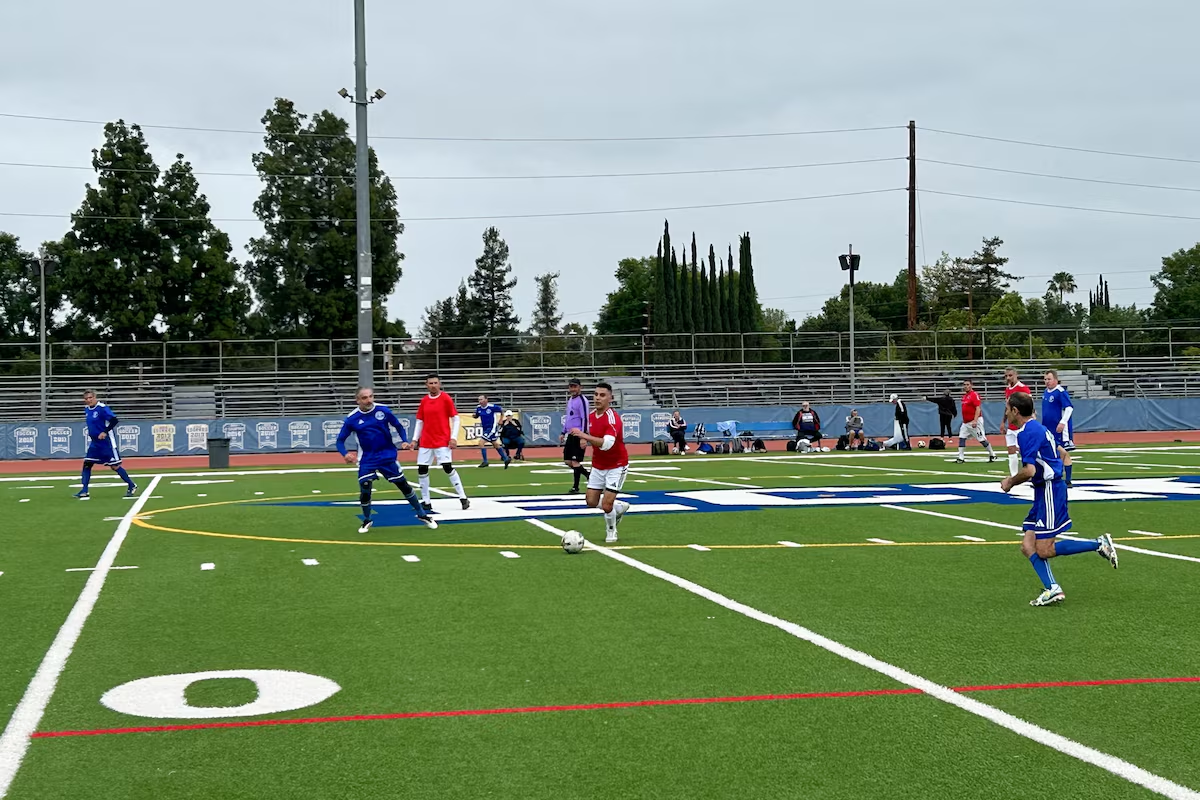
“All players wish to have a chance to play in the World Cup,” said Shafi, 46, speaking after a Sunday morning match with Arya FC, an amateur Iranian-American club in the Los Angeles suburb of Woodland Hills.
“It doesn’t matter what’s happening in the world. We are so excited to see our national team.”
Even so, Shafi acknowledged the dilemma facing many fans.
“It’s a very complicated situation,” he said. “Nobody likes to see their country under bombing. It’s very complicated for our people.”
‘TEHRANGELES’
Tens of thousands of Iranian-Americans live in Los Angeles, where a distinct diaspora community often known as “Tehrangeles” has flourished. Team Melli, meaning “national team” in Persian, has long served as a cultural link to a homeland many left after the 1979 Iranian Revolution amid political upheaval and repression.
Iran are scheduled to face New Zealand and Belgium in Los Angeles on June 15 and June 21 before travelling to Seattle to play Egypt on June 26. Shafi has already secured tickets and is focused on the rare opportunity to watch the team in person.
That enthusiasm is not shared by all.
Arya FC teammate Shawn Rezaei has reached the opposite conclusion.
The 59-year-old restaurant executive, who left Iran during the revolution, has attended World Cups in Germany, Brazil, Russia and Qatar. This year, he said, will be the first tournament he chooses to miss.
Other Iranian-American fans who spoke to Reuters requested anonymity, saying criticism of Iran’s government could endanger relatives back home, while speaking publicly about U.S. policy could carry consequences within their communities.
Some also cited safety concerns, questioning whether Iran matches could become flashpoints for anti-war demonstrations, protests against the Iranian government or immigration enforcement actions.
The tensions help explain the cautious approach often taken by Iran’s players.
At the 2022 World Cup in Qatar, members of the Iranian squad drew international attention when they refrained from singing the national anthem before their opening match, a gesture widely interpreted as support for anti-government protesters.
In subsequent matches, celebrations remained subdued and displays of nationalism were limited, actions viewed by some as quiet resistance but criticised by others as insufficient. The episode highlighted the pressures facing the team, amid reports that players and their families could face repercussions in Iran.
“Who am I to judge the actions of the team when I myself don’t want to speak out publicly in case it endangers my family,” said one Iranian-American fan with relatives in Tehran who plans to attend a World Cup match in Los Angeles