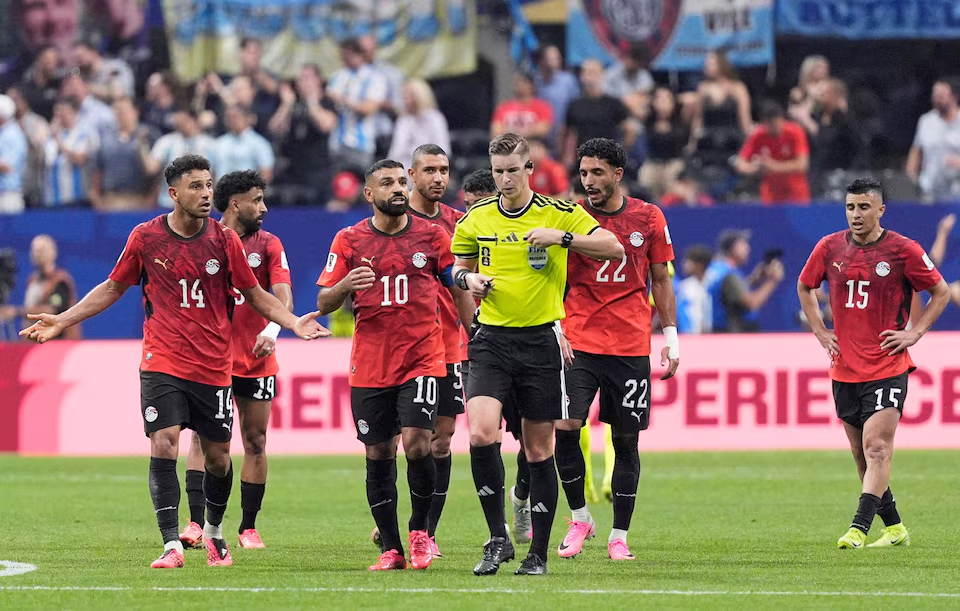
FIFA refereeing chief Pierluigi Collina has rejected allegations of bias in Argentina’s 3-2 victory over Egypt in the World Cup round of 16, saying match officials acted independently and that questioning their integrity had no place in football.
In an interview published on FIFA’s official website on Thursday, Collina defended the officiating team after Egypt complained about several key decisions in the match, including a disallowed goal and the rejection of a late penalty appeal.
“Constructive discussion about decisions will always be part of football, but unfounded allegations have no place in our sport,” Collina said.
“Nobody can question the integrity of the FIFA World Cup match officials.
“Nobody can claim that FIFA refereeing can be influenced by anyone, not even by the FIFA president (Gianni Infantino).”
Collina added that accusations questioning the integrity of referees could expose match officials and their families to abuse and threats.
Egypt were eliminated after surrendering a 2-0 lead, with Enzo Fernandez scoring a stoppage-time winner to send Argentina into the quarter-finals.
Following the defeat, Egypt coach Hossam Hassan suggested there may have been pressure to ensure the defending champions remained in the tournament, while the Egyptian Football Association said several decisions had raised “serious concerns” over the consistency and fairness of the officiating.
The EFA argued that Mostafa Ziko’s second-half goal was wrongly ruled out following a VAR review and also criticised officials for not awarding a penalty after Mohamed Salah went down in the area shortly before Argentina’s winning goal.
Collina said VAR had acted correctly in recommending an on-field review of Ziko’s goal after identifying a foul by Marwan Attia on Argentina defender Lisandro Martinez during the attacking possession phase.
“We believe that a foul is a foul,” Collina said.
“Regardless of whether the foul appears ‘obvious’, if the referee did not see it on the field of play, the VAR can intervene.”
He also defended the decision not to award Egypt a penalty, saying both the referee and the video assistant referee concluded that the contact between Salah and Argentina forward Julian Alvarez did not constitute a foul.
“Stepping on an opponent’s foot is a foul, whereas a defender who touches the ball first and then makes normal football contact has not committed a foul,” Collina said.
While acknowledging that some decisions would always involve an element of subjectivity, Collina said FIFA was satisfied with the application of VAR protocols throughout the tournament.