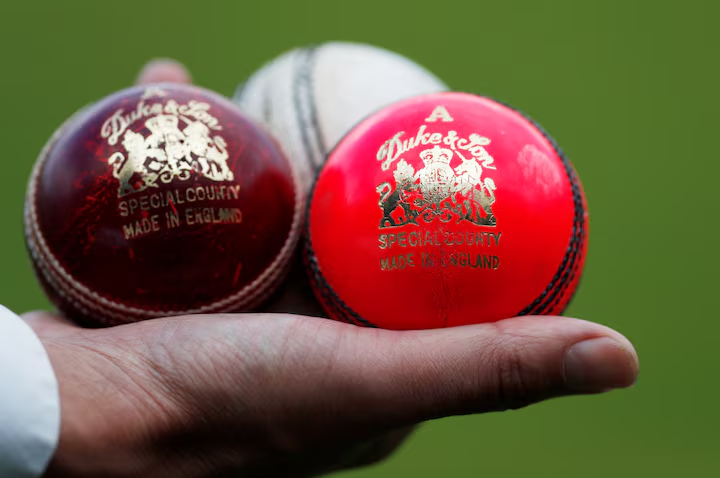
Debate over ball management in cricket is gathering momentum, with India captain Shubman Gill calling for the return of saliva to shine the ball as players and former cricketers seek ways to revive the art of reverse swing.
Gill’s comments came after India struggled to bowl out New Zealand on a placid Basin Reserve pitch in Wellington, prompting the captain to argue that existing restrictions have made life increasingly difficult for fast bowlers.
The 2018 ball-tampering scandal involving Australia in South Africa remains a major reference point in discussions about ball management, with players, coaches, umpires and television cameras now keeping a close watch for potential breaches.
The increased scrutiny has coincided with a decline in reverse swing, while the International Cricket Council (ICC) further restricted ball maintenance in 2020 by banning the use of saliva during the COVID-19 pandemic.
Gill believes the restriction has outlived its purpose and should be reconsidered.
“There was a rule that you can’t put saliva on the ball to make it shine,” he told reporters.
“It’s been seven to eight years and I still don’t understand why they are not allowing it. If you’re not able to maintain the ball, especially on wickets like these, it makes the job of the bowlers very difficult.”
The ICC, however, has no plans to lift the ban, considering the use of saliva unhygienic.
The Marylebone Cricket Club (MCC), which is responsible for the laws of cricket, has also maintained its support for the restriction. In a 2022 statement, it said the ban had “little or no impact” on swing while eliminating grey areas involving fielders using sugary sweets to alter their saliva.
REVIVING THE ART OF REVERSE SWING
Bowlers and fielders can still use sweat to polish the ball, although it is considered less effective than saliva.
Reverse swing was famously mastered by Pakistan fast-bowling greats Wasim Akram and Waqar Younis, who used an old ball to produce late movement that often left batters struggling to respond.
Unlike conventional swing, reverse swing moves in the opposite direction, making an older ball particularly dangerous even after batters have negotiated the initial overs.
The technique depends on carefully managing the ball’s condition by maintaining one polished side while allowing the other to become rough.
Fielders traditionally used saliva to polish the surface, while natural wear from bowling and contact with the ground helped create the difference between the two sides.
However, attempts to deliberately roughen the ball beyond permitted methods can constitute ball-tampering.
Waqar became the first player suspended for ball-tampering in 2000. India great Sachin Tendulkar and former England captain Mike Atherton were also accused of similar breaches, while South Africa’s Faf du Plessis was sanctioned twice, including for using saliva from a mint to shine the ball.
The issue reached a turning point in 2018 when television cameras caught Australia’s Cameron Bancroft with sandpaper during the third test against South Africa at Newlands.
Bancroft, captain Steve Smith and vice-captain David Warner accepted responsibility for a plan to roughen one side of the ball. Smith received a one-match ban and a fine from the ICC, Bancroft was fined, while Warner escaped punishment from the governing body.
The incident, widely known as “Sandpapergate”, triggered a strong reaction in Australia, prompting Cricket Australia to impose severe sanctions on the players.
The ICC subsequently upgraded ball-tampering to a level-three offence, introducing tougher penalties. Reported cases have since declined.
Former Australia batter and coach Justin Langer recently argued that the scandal had almost killed reverse swing by making players fearful of preparing the ball.
FINDING A BALANCE
The ICC men’s cricket committee supports the preservation of reverse swing as a legitimate bowling skill, provided it does not involve ball-tampering.
The committee has also explored the possibility of returning to a single new ball in one-day internationals, replacing the current system of using two new balls from opposite ends. The change would allow the ball to age naturally and potentially create greater opportunities for reverse swing.
Former England batter Dawid Malan believes cricket should consider relaxing some restrictions while maintaining clear boundaries against the use of external substances.
“Historically, over the game, people have been caught trying to tamper with the ball for years,” Malan said on a BBC podcast this year.
“It’s not a new thing. I actually think you should legalise it, like just let people scratch the ball.”
“Obviously, do not bring things in from outside. But it’s a skill in itself — to be able to get the ball to reverse swing. It will make cricket a lot more bowler-friendly.”