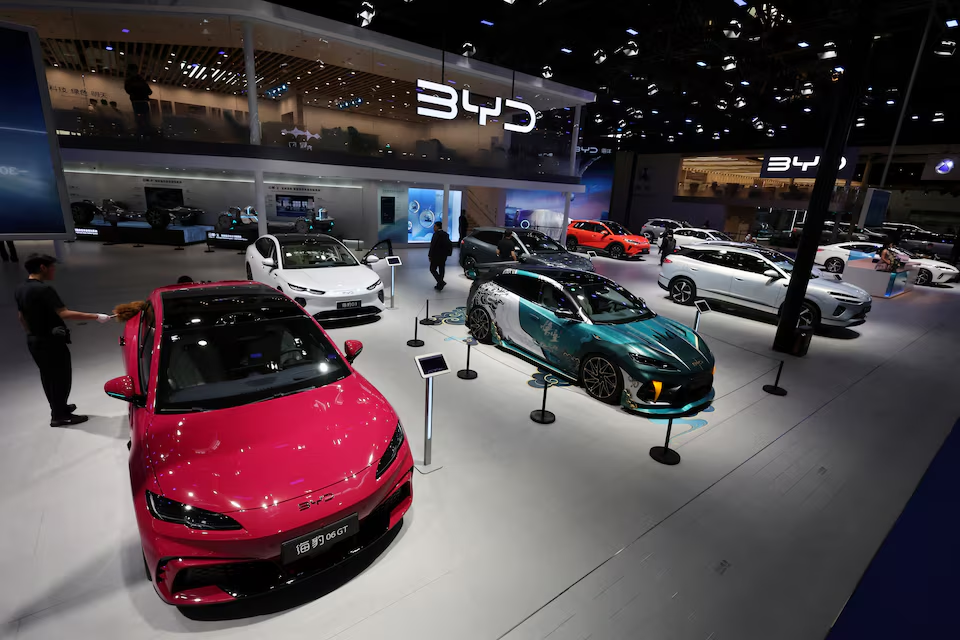
LONDON : Chinese electric vehicle giant BYD could find sponsorship a more practical route into Formula One than launching or acquiring a team, as the company seeks to raise its profile in international markets while avoiding the significant costs and regulatory hurdles associated with full participation.
The world’s largest electric vehicle manufacturer by sales has expressed interest in becoming involved in Formula One, a championship that has increasingly attracted global automakers seeking to strengthen brand recognition through one of the world’s most visible sporting platforms.
“Everyone wants to be involved with F1,” Bernstein analyst Ian Moore told Reuters.
“It’s because it’s the greatest marketing vehicle for OEMs (Original Equipment Manufacturers) that’s out there.”
Formula One’s current ecosystem already includes major automotive groups such as Ferrari, Mercedes-Benz, Ford and General Motors’ Cadillac, all of which have either direct team involvement or technical partnerships within the sport.
FIA President Mohammed Ben Sulayem and Formula One have previously indicated openness to a Chinese team joining the grid if it delivers commercial and sporting value.
With China hosting the Shanghai Grand Prix and Formula One reporting more than 220 million fans in the country, BYD could present a compelling commercial case should it pursue entry as the sport’s 12th team.
However, analysts say the financial commitment required would be substantial.
“From a financial point of view it might not sound like a wise move to spend so much money on a field they barely know,” independent automotive analyst Felipe Munoz told Reuters.
Building a competitive Formula One operation would require significant investment in facilities, technology and personnel, with infrastructure costs alone running into hundreds of millions of dollars. New entrants would also face anti-dilution payments to existing teams, a fee that exceeded $450 million when Cadillac secured its entry.
Acquiring a stake in an existing team may appear a more straightforward option but would also come with complications, including ownership restrictions and approval requirements from current stakeholders.
As a result, industry observers see sponsorship as the most accessible entry point.
“Entering F1 as a sponsor only would be the lowest risk for BYD because it avoids the FIA regulatory requirements such as demonstrating technical and governance compliance requirements,” sports law barrister Nick De Marco told Reuters.
A sponsorship agreement with a midfield team could be secured at a fraction of the cost of operating a Formula One team. While leading outfits command premium deals worth hundreds of millions of dollars over several years, smaller teams offer significantly lower-cost branding opportunities.
Such an arrangement would allow BYD to leverage Formula One’s growing global audience while maintaining flexibility as it expands internationally, including plans to increase local vehicle production in Europe by 2028.
There could, however, be drawbacks. Analysts note that sponsorship alone may limit BYD’s ability to showcase its engineering and technological capabilities, a key advantage often associated with direct participation in motorsport.
“I’m not sure if that’s an option given that they’re also an OEM,” Moore said, referring to the possibility of a broader Formula One sponsorship, which could create conflicts with existing automotive manufacturers involved in the championship.
De Marco said a branding-focused partnership would provide visibility but not necessarily demonstrate the company’s technical expertise.
“I imagine that is the key benefit BYD would seek to derive from that participation,” he said.
For now, sponsorship appears the most realistic and least risky route should BYD decide Formula One can help accelerate its global ambitions.