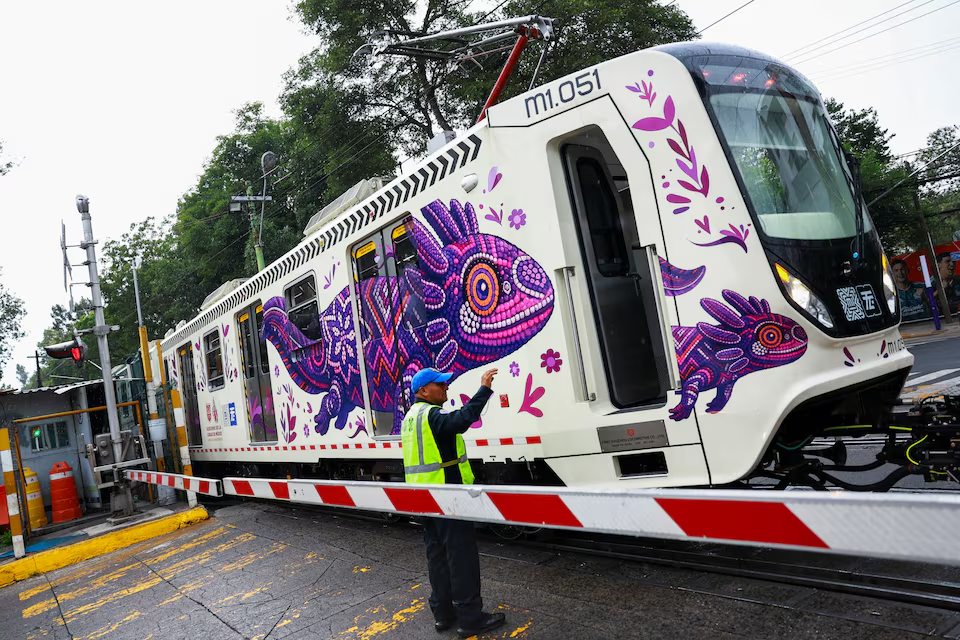
MEXICO CITY : Visitors arriving in Mexico City for the 2026 FIFA World Cup are likely to encounter the smiling face of the axolotl almost everywhere — on murals, subway cars and giant public sculptures — but finding the endangered salamander in the wild is becoming increasingly difficult.
Named after the Nahuatl word for “water monster,” the axolotl has emerged as an unofficial symbol of the Mexican capital as it prepares to host five World Cup matches, including Thursday’s opening game.
The widespread use of the amphibian’s image, however, has sparked criticism among some residents who argue that the cheerful portrayals obscure the environmental challenges threatening the species’ survival.
Scientists monitoring wild axolotl populations say they have not physically observed a single specimen in Mexico City’s canals during the past two years, prompting concern over the animal’s future. Critics have also mocked what they call the city’s “axolotlization” through a wave of internet memes depicting giant axolotls roaming the capital.
Mexico City’s government did not respond to requests for comment.
Ernesto Velazquez, 19, who sells axolotl-themed stuffed toys in Chapultepec Park, said he hoped the World Cup spotlight could raise awareness about conservation.
“Some foreigners have asked if you can eat them — well no, they’re at risk of extinction,” he told Reuters. “I hope the World Cup will help people learn more so we take better care of them.”
The axolotl, scientifically known as Ambystoma mexicanum, is native to the ancient lake system on which Mexico City was built. Unlike most amphibians, it remains aquatic throughout its life and historically thrived among the chinampas, or floating agricultural islands, that sustained the Aztec capital of Tenochtitlan.
Urban expansion, habitat destruction and water contamination have dramatically reduced its range over recent decades. Today, the canals of the southern district of Xochimilco are among the species’ last remaining natural habitats.
Researchers from Mexico’s National Autonomous University (UNAM) estimated the wild population at around 36 axolotls per square kilometre in Xochimilco in 2014, down sharply from approximately 6,000 per square kilometre in 1998.
A new census launched in 2024 has yet to produce a single direct sighting despite two years of fieldwork.
Vania Mendoza, who coordinates the survey, said researchers spent months navigating the canals before dawn in search of axolotls but found none in their nets.
However, environmental DNA analysis of water samples confirmed that some individuals still survive in the canal system. UNAM is expected to publish the results of the study later this summer.
While the axolotl’s image has become one of the most recognizable symbols of Mexico City’s World Cup celebrations, conservationists warn that protecting the species will require more than public art and souvenirs if it is to remain part of the city’s future rather than its past.