



DOHA: In the early 90s, in the post-Amritraj and Ramesh Krishnan era (barring the famous win over France in 1993 in Davis Cup), Indian tennis was mostly success starved.
Then came this Calcutta boy, emerging as a beacon of hope for Indian tennis.
For the tennis fans, Leander Paes stood for passion and emotion.
As a journalist, I had the privilege of covering some of the most iconic Davis Cup ties in India that featured him, starting in 1995 at the South Club in Calcutta.
The bronze medal at the 1996 Olympic Games marked the beginning of a new era.
Alongside his long-time doubles partner Mahesh Bhupathi, Paes perfected the art of winning in doubles finals.
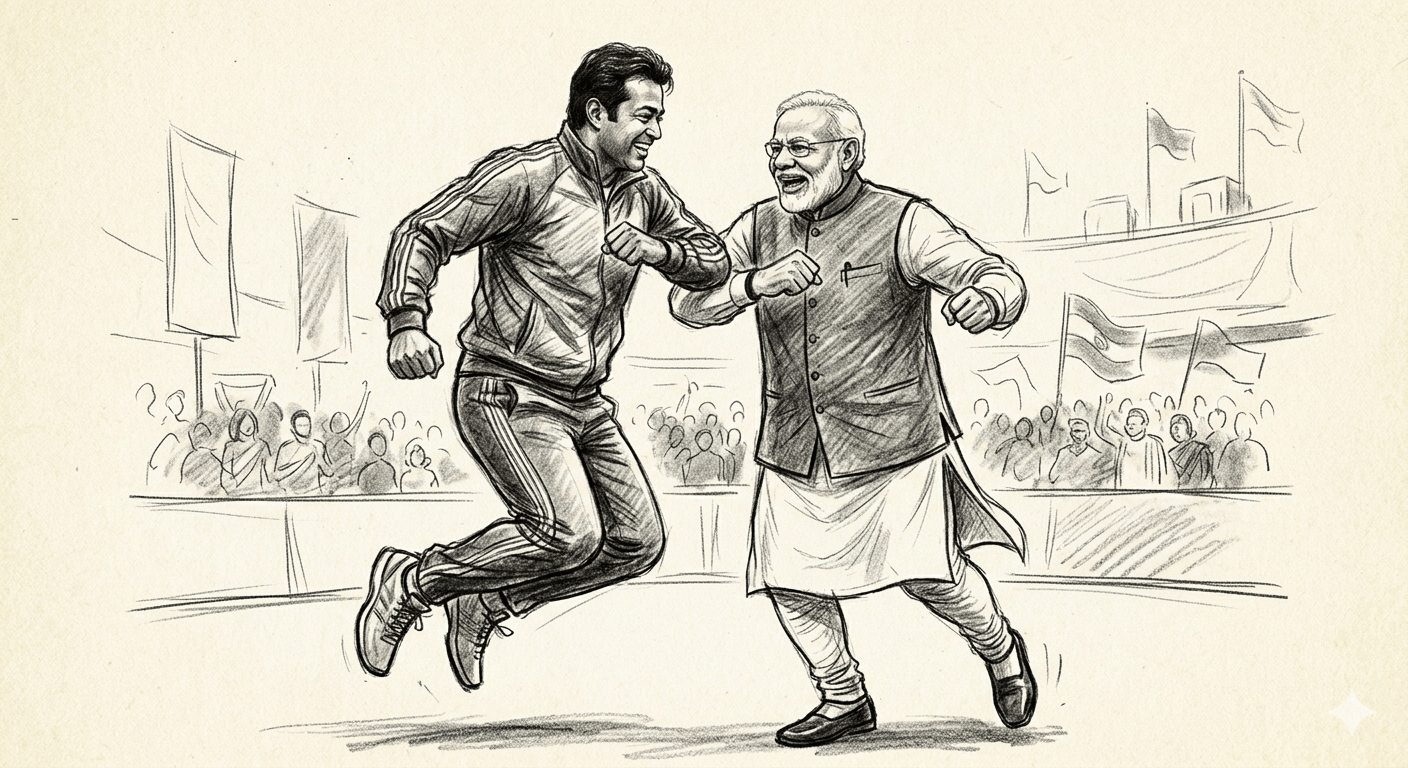
Oh yes, that unforgettable celebration — the chest-bump.
Those chest-bumps with Bhupathi on the court gave us goosebumps; but this chest-bump with the 56-inch chest is different — it carries a political hue, far from any sporting triumph.
Earlier, he had a stint in Bollywood. Like many former retired sportspersons, he must have felt the fading arc of limelight.
The son of an Olympian and a basketball star, Leander Paes carried the sporting excellence in his blood. He even traced his lineage to Bengal’s eminent poet Michael Madhusudan Dutt.
In many ways, Paes embodied a certain refined Bengali and Anglo-Indian culture — articulate and global yet firmly rooted.
On tennis courts across the world, he elevated himself from being a Davis Cup hero to the poster boy of Indian tennis.
The chest-bumps on the tennis courts were spontaneous and apolitical. Watching him was a sheer expression of joy.
But Paes’ newfound passion was unexpected. For his fans, it’s like a departure from the very image they held onto for decades. For them, it feels jarring.
Which is why this political association doesn’t quite gel with a section of fans.
Unforced error?
Well, not exactly.






Shaandaar write up