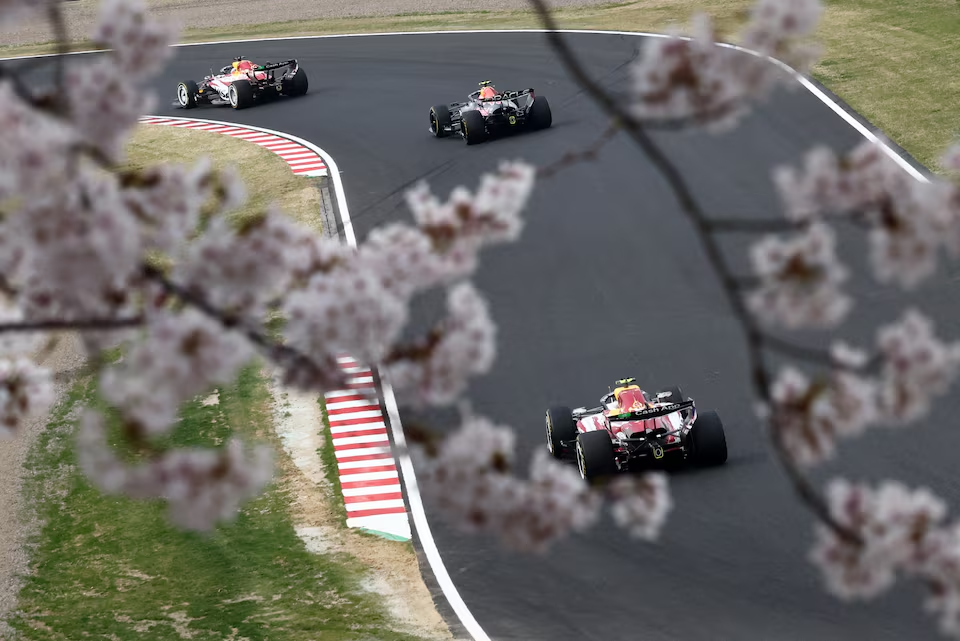
SUZUKA, Japan : Formula One heads into a five-week break with major questions after the first three races of its new engine era highlighted both promise and problems.
The overhaul, one of the most sweeping in the sport’s history, has introduced hybrid power units split almost evenly between electric and combustion energy. While designed to improve efficiency and sustainability, the changes have significantly altered how drivers race.
Drivers are now required to “lift and coast” into corners to recharge batteries, while also dealing with “super-clipping” — a system that diverts energy away from the engine, reducing speed even when the throttle is fully applied.
The governing body Fédération Internationale de l’Automobile said it would review the regulations during the April break, which comes after races in Bahrain and Saudi Arabia were cancelled due to regional conflict.
Several leading drivers voiced frustration with the new system. Max Verstappen said he was “beyond frustrated” and even hinted at reconsidering his future in the sport.
Reigning champion Lando Norris described the dramatic loss of speed as painful, saying, “It still hurts your soul when you see your speed dropping so much.”
Veteran Fernando Alonso was even more critical, claiming driver skill had been diminished under the new system.
Meanwhile, Charles Leclerc pointed to the unpredictability of the energy management algorithms, which can leave drivers short of power due to minor inputs such as correcting a slide.
Despite criticism, the new rules have added unpredictability to races, with cars frequently overtaking as they alternate between deploying and harvesting energy.
Seven-times world champion Lewis Hamilton has been among those praising the closer racing, even as others remain unconvinced.
However, safety concerns were also raised after Oliver Bearman crashed on Sunday while approaching Franco Colapinto with a speed difference of around 50 kph — a stark illustration of the risks created by varying energy deployment.
With teams and regulators set to analyse the situation, Formula One now faces a crucial period to refine its new era without losing the essence of racing.