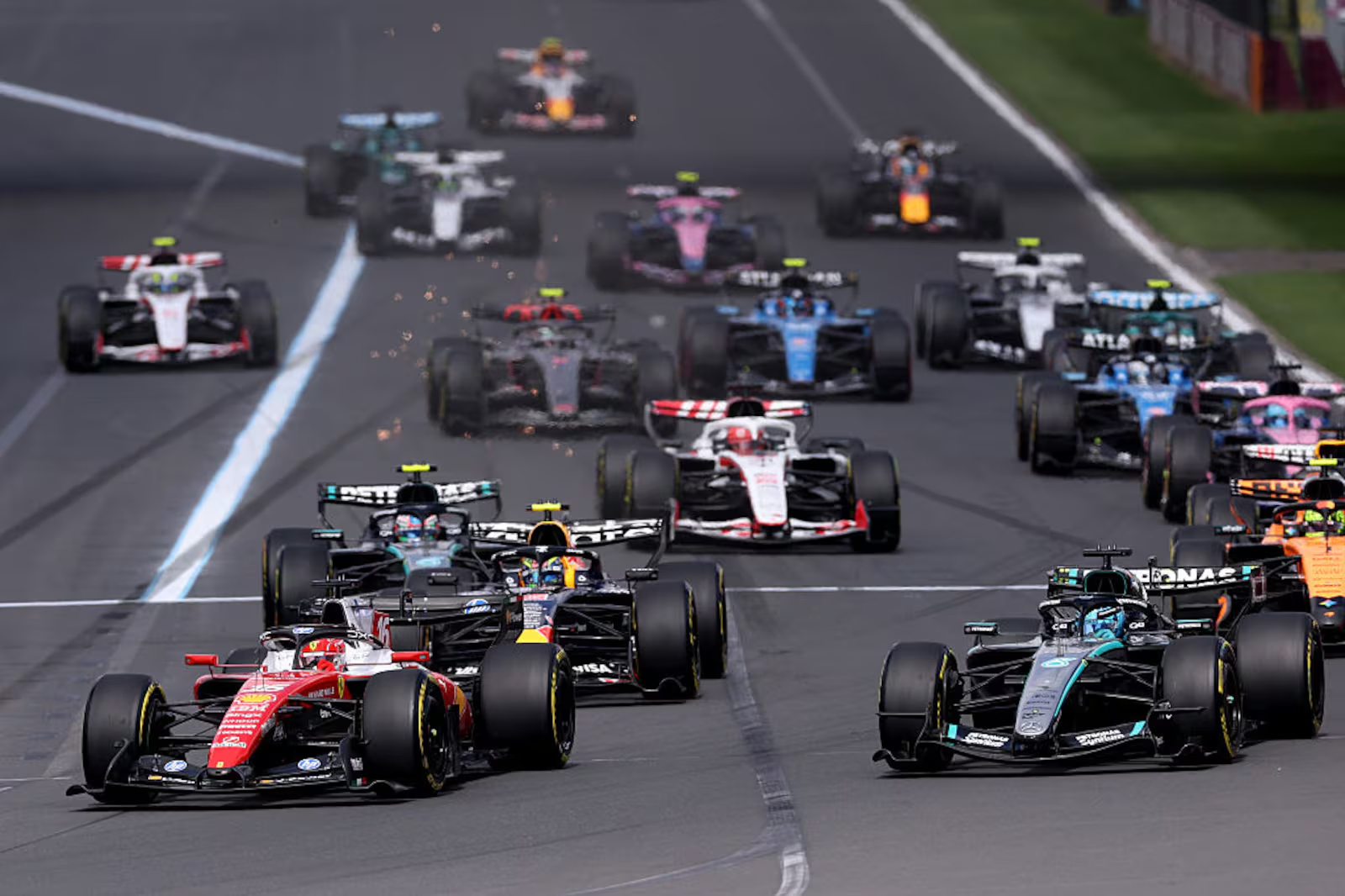
BEIJING: Several Formula One drivers warned on Wednesday that a major start-line crash could be inevitable this season unless the sport’s new engine regulations are adjusted, with some cars accelerating far quicker than others off the grid.
Liam Lawson of Racing Bulls said he feared a collision during last weekend’s Australian Grand Prix after his car struggled to get off the line while Franco Colapinto’s Alpine F1 Team machine rapidly closed in behind.
“If it keeps going on like this, then yep,” the New Zealander said when asked if a big crash was only a matter of time.
“At the moment, it is quite dangerous,” he added, praising Colapinto’s quick reactions for swerving to avoid hitting the back of his car.
Under the new rules, around half of a car’s peak power now comes from its battery system, while the turbo is no longer pre-spooled by an electric motor that has been removed from this year’s power units. The change has made it harder for some teams to generate sufficient energy and turbo boost while cars wait on the grid.
The regulations also introduced a roughly 50-50 split between electric power and the combustion engine, creating more torque and allowing cars further back on the grid to reach the start line at much higher speeds if those ahead struggle to launch.
Sergio Perez, racing for Cadillac F1 Team, said the situation could soon lead to a serious accident.
“It’s just a matter of time until a massive shunt happens,” Perez said. “These power units are very difficult to start.
“And then it can be very, very dangerous, because the speeds that you end up doing within two to three seconds are extreme.”
Carlos Sainz of Williams Racing said he shared the concerns, adding that the new ‘Boost’ mode designed to aid overtaking could also lead to dangerous closing speeds of 40-60 kph during races.
Colapinto said teams would likely find solutions to improve their launches but acknowledged the current situation posed risks.
“At the minute it is a little bit dangerous,” he said.
Asked whether teams should consider NASCAR-style spotters relaying real-time information to drivers during starts, Colapinto said the opening moments of a race were too chaotic and the information currently relayed through steering wheel displays was not always enough.