NEW DELHI: In September 2025, a simple and time-honoured cricket ritual – the post-match handshake – became a focal point of controversy and a symbol of deeper diplomatic tensions between India and Pakistan.
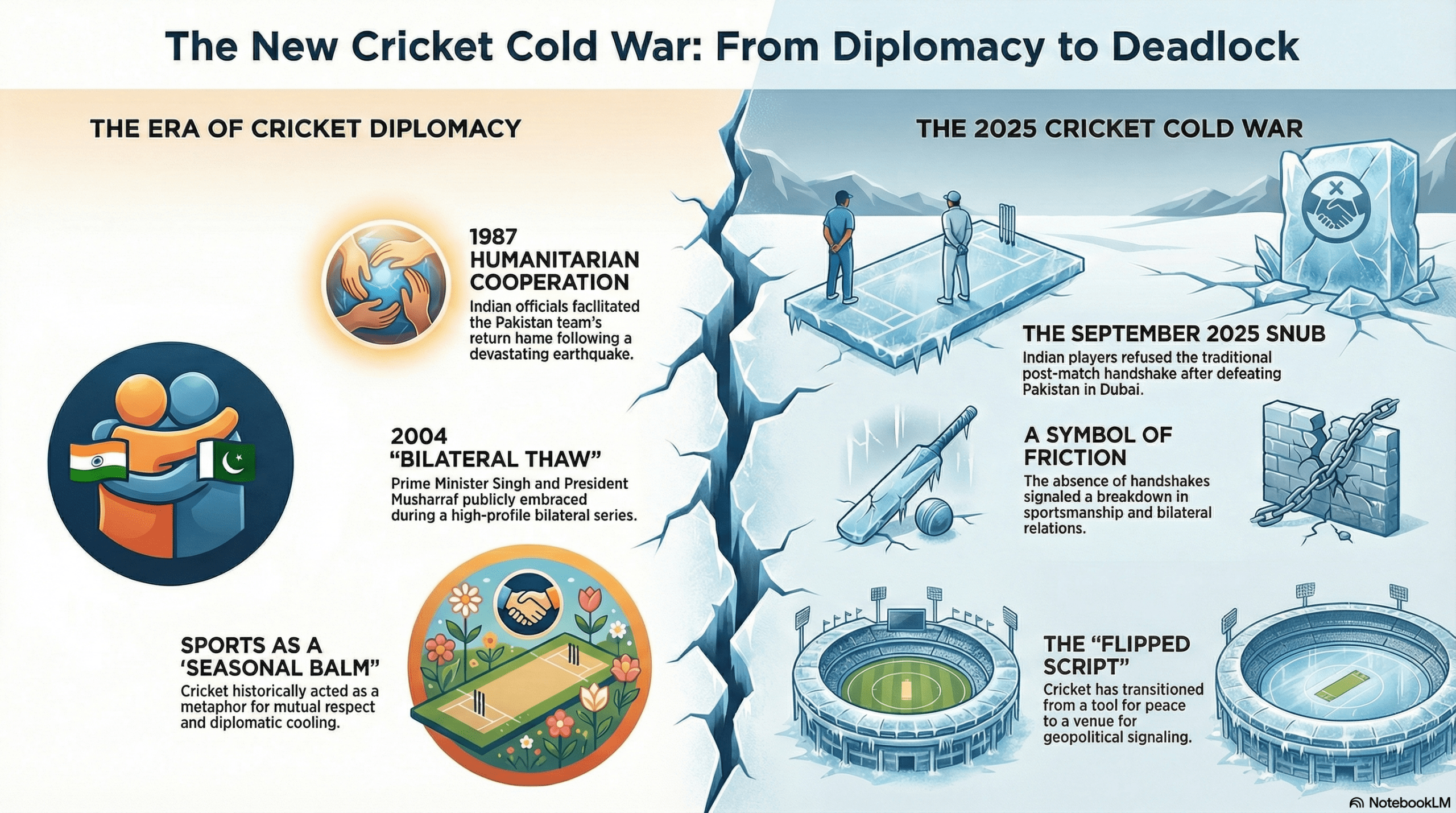
At the Asia Cup clash in Dubai, after India’s comprehensive win over Pakistan, Indian players walked off the field without engaging in the traditional handshake with their Pakistani counterparts. That gesture – or lack of it – rippled far beyond the boundary ropes.
Sportsmanship, defined by rituals like handshakes, has long served as a metaphor for respect between rivals. Its absence signalled something more: a cricketing cold war reflecting sour bilateral relations and broader geopolitical friction.
When politics enters the stadium
Cricket diplomacy once acted as a seasonal balm between India and Pakistan. In 1987, Pakistan’s team was flown home by Indian officials following a devastating earthquake in northern Pakistan; in 2004, then-Indian Prime Minister Dr Manmohan Singh and President Pervez Musharraf embraced publicly during a bilateral series. These moments demonstrated sport’s ability to thaw diplomatic chill. Today, however, the script has flipped.
In an unprecedented move ahead of the ICC Men’s T20 World Cup 2026, Pakistan’s government announced that, although its team will compete in the tournament, it will boycott their scheduled group match against India on 15 February in Colombo, Sri Lanka. Officials cited political tensions and framed the boycott as alignment with regional partners over what they describe as alleged bias within cricket governance, though critics argue it is chiefly a political gesture.
The International Cricket Council (ICC) swiftly warned that selective participation undermines the integrity and spirit of the global game, urging Pakistan to reconsider. India’s own cricket board, the Board of Control for Cricket in India (BCCI), publicly backed the ICC’s stance on sportsmanship.
Whatever the outcome on the field, the fact that cricket – a unifying force for millions – has become a battlefield for geopolitical dispute, is a striking reflection of regional dynamics.
Sports diplomacy – potent but fragile
Sports diplomacy operates on a simple premise: athletic competition offers neutral ground for cooperation and cultural exchange. At its best, sport gives rivals a neutral space to engage, sometimes easing tensions beyond the field.
In South Asia, where cricket is almost a secular passion, matches between India and Pakistan have traditionally been more than sports. They are ceremonies of national pride and emotional expression, watched by hundreds of millions globally, generating powerful economic and symbolic value.
But when political tensions escalate, the same ritual becomes contested space. The refusal to shake hands in the Asia Cup was not merely a gesture at the boundary – it was a diplomatic statement. Pakistan’s cricket officials and players reacted strongly, with calls for accountability around match officiating and ritual observance.
This diplomatic tension now amplifies with the World Cup boycott – scheduled to forfeit two points for Pakistan – raising questions about the future of cricket diplomacy in South Asia.
Beyond India–Pakistan: The global picture
It is not only South Asia where geopolitics seeps into sport. Across the world, national rivalries, sanctions, and diplomatic disputes have affected participation in international tournaments. International sporting federations regularly navigate sensitive terrain where political controversies risk derailing competition, from Olympic boycotts in the 20th century to modern debates over athlete protests and national representation.
Yet cricket’s unique place in India and Pakistan means this clash carries outsized symbolic importance. The absence of an India–Pakistan match at a global tournament hurts not just fans and broadcasters, but sports diplomacy itself – a tool that can open doors when formal diplomacy stalls.
Can sport still be a bridge?
Cricket, like all sport, carries the contradictions of the societies that play it: passion and rivalry, fraternity and nationalism. That the handshake – a small act of respect – has been politicised is unfortunate, but it also reflects the depth of emotion attached to this contest.
If sports diplomacy is to endure, it requires leadership willing to separate the purity of competition from the weight of national politics. It requires athletes, officials and fans to remember that while games are inherently competitive, they can also be vessels for mutual understanding.
The challenge now is simple yet profound: ensure that cricket remains a space that not only showcases athletic excellence but also affirms a shared humanity – NOT an echo chamber for division.
———————————————————————————————————-
Sources: