NEW DELHI: India’s motorsport ecosystem is steadily evolving, with a growing network of permanent circuits, street races, and karting venues reflecting increased ambition and investment. While the country is yet to match the depth, scale, and maturity of established racing markets such as Europe or Japan, recent developments point to clear momentum—driven by a mix of government backing and private-sector involvement.
Permanent and Street Circuits: The Backbone of Competitive Racing
Permanent racing circuits form the foundation of any serious motorsport ecosystem, and India today boasts a select but significant roster of venues.
The Buddh International Circuit (BIC) in Greater Noida remains the country’s most internationally recognised track. It hosted the Formula 1 Indian Grand Prix between 2011 and 2013 and later welcomed MotoGP. Efforts are currently underway to revive major global events at the venue, including potential rounds of international series such as Super Formula.
In Chennai, the Madras International Circuit (MIC)—India’s oldest operational racetrack—continues to play a pivotal role in domestic motorsport. It regularly hosts national championships, the F4 Indian Championship, and the Indian Racing League.
India has also made inroads into street racing. The Hyderabad Street Circuit hosted the Formula E World Championship (ePrix) in 2023, marking the country’s entry into the global electric single-seater arena. Meanwhile, the Chennai Formula Racing Circuit, a newer urban layout, has already begun staging rounds of national racing series.
Beyond these headline venues, circuits in Coimbatore (Kari Motor Speedway), Goa, and the upcoming CoASTT Racing Track further expand India’s racing footprint. Collectively, these facilities have enabled the hosting of national championships, grassroots competitions, and occasional international events. The Goa Street Race 2025, set on an FIA-standard coastal circuit, exemplifies this trajectory and reflects growing government interest in motorsport as both a sporting discipline and a tourism driver.
Economic and Cultural Impact of Motorsport
Motorsport’s significance extends well beyond the racetrack.
Major racing events can boost tourism and hospitality, attracting international visitors while showcasing regional destinations. At the same time, motorsport promotes technical excellence, demanding high standards in engineering, safety, logistics, and precision—skills that can spill over into India’s broader automotive, manufacturing, and technology sectors.
Equally important is youth engagement. As interest in automotive sport grows, motorsport opens career pathways not only for drivers but also for engineers, data analysts, mechanics, event managers, and officials.
Karting: Building the Grassroots Pipeline
Globally, karting is the entry point to professional racing—nearly every elite driver, from Lewis Hamilton to Sebastian Vettel, began their journey on a karting track. In India, karting is experiencing notable growth, supported by facilities that cater to both recreational users and aspiring professionals.
Venues such as Meco Kartopia in Bengaluru, SMAAASH Sky Karting in Gurugram, and Formula-11 Karting in Noida highlight a rapidly expanding and accessible karting culture.
One of the most significant shifts in India’s motorsport landscape is the move away from elite, inaccessible racing toward broader community participation. Historically, India lacked the dense network of entry-level tracks that underpin motorsport ecosystems in developed racing nations. That gap is now being addressed through large-format karting facilities designed for both competition and public engagement.
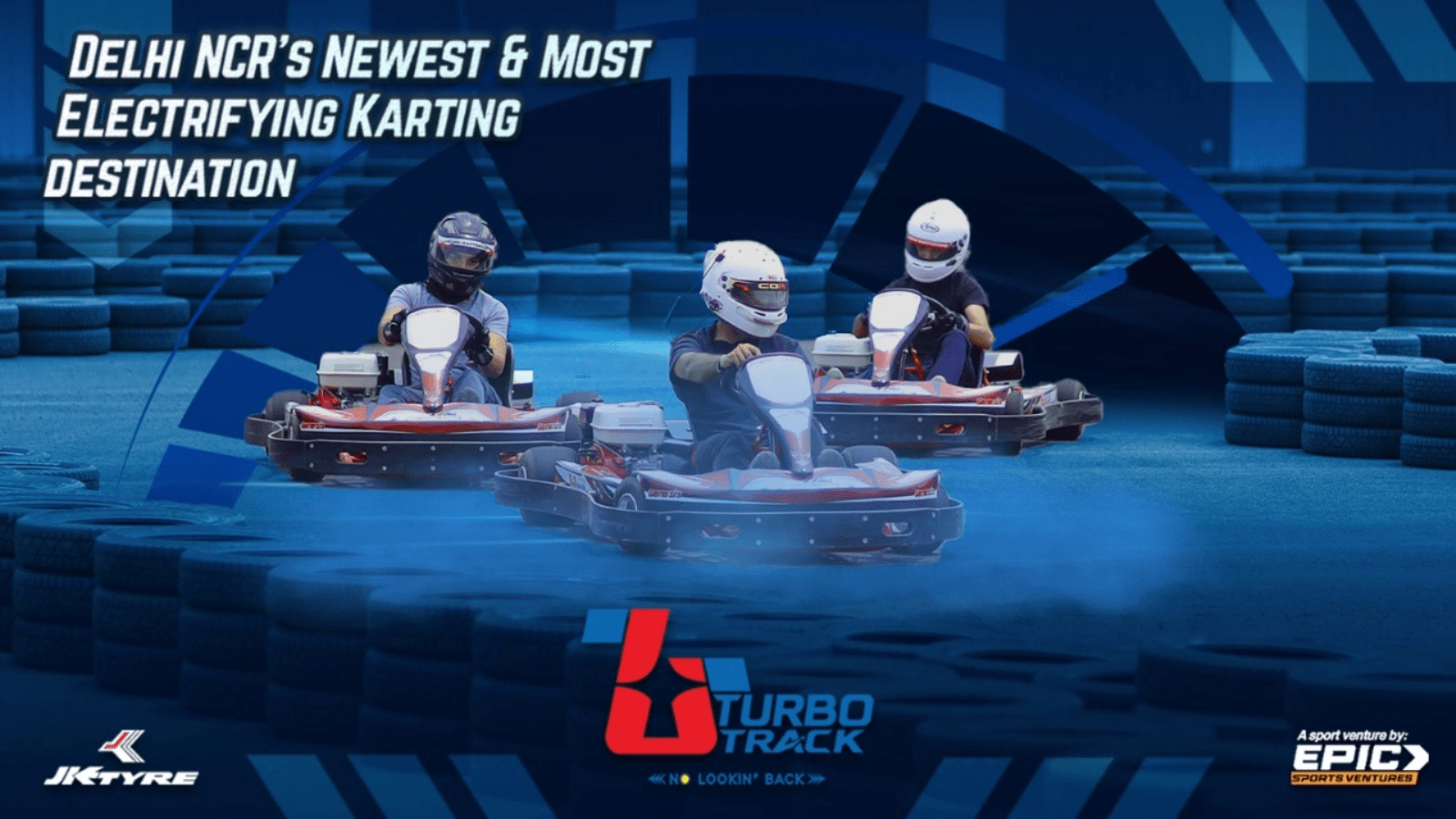
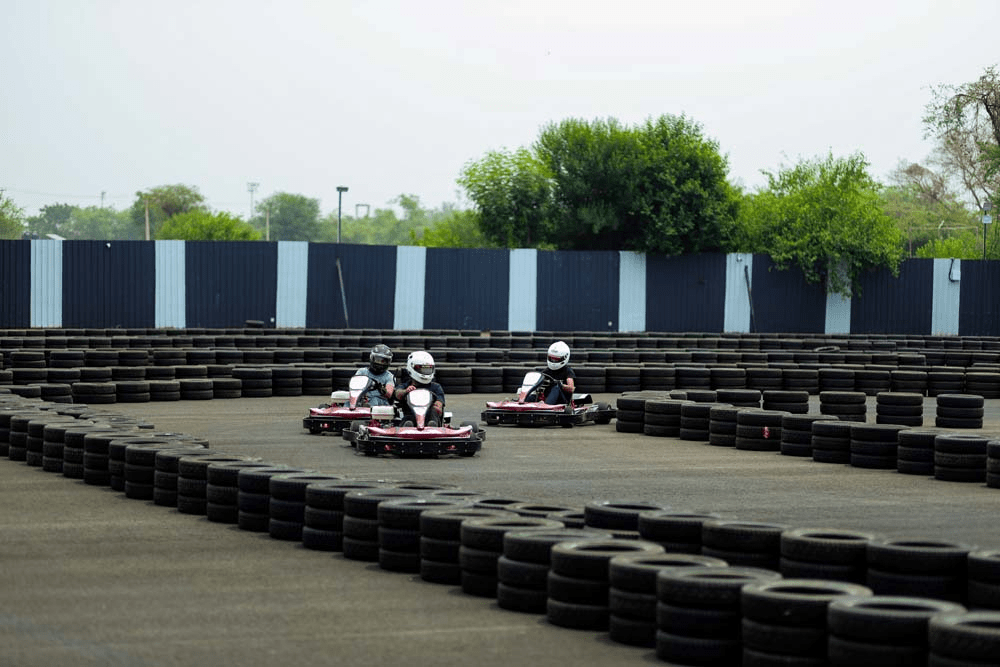
Facilities such as Turbo Track in the Delhi National Capital Region exemplify this new approach. As one of the region’s largest go-karting tracks, it represents a generation of motorsport spaces prioritising safety, scale, and inclusivity. By welcoming participants from as young as eight to as old as eighty, such venues reposition karting from a niche sport into a shared experience for families, students, and working professionals.
These tracks play a dual role—introducing new fans to motorsport while also identifying and nurturing young talent that could feed into competitive racing pipelines.
Structural Challenges and Global Comparisons
Despite this progress, challenges remain. Compared with established international hubs such as Silverstone and Spa-Francorchamps in Europe, Yas Marina and Bahrain in the Middle East, and Suzuka and Shanghai in East Asia, India faces clear limitations.
The country has relatively few FIA Grade-certified circuits, restricting its ability to host top-tier global series on a regular basis. Motorsport development remains geographically uneven, with infrastructure concentrated in only a handful of cities. Funding constraints and access barriers also persist, particularly for young drivers seeking to progress beyond karting and into professional series.
Industry observers note that sustained growth will require structured grassroots programmes, driver academies, and clearly defined developmental pathways—areas where India is still building long-term capacity.
A Market Poised for Growth
Even with these constraints, India’s motorsport ecosystem stands at a critical inflection point. Interest is rising, infrastructure is expanding, grassroots participation is increasing, and the appetite for high-performance racing is stronger than ever.
The successful staging of global events such as Formula E in Hyderabad, alongside the growth of domestic championships like the Indian Racing League, signals a widening fan base and underscores India’s potential as an emerging motorsport market—one capable of cultivating a genuinely vibrant and sustainable racing culture.