



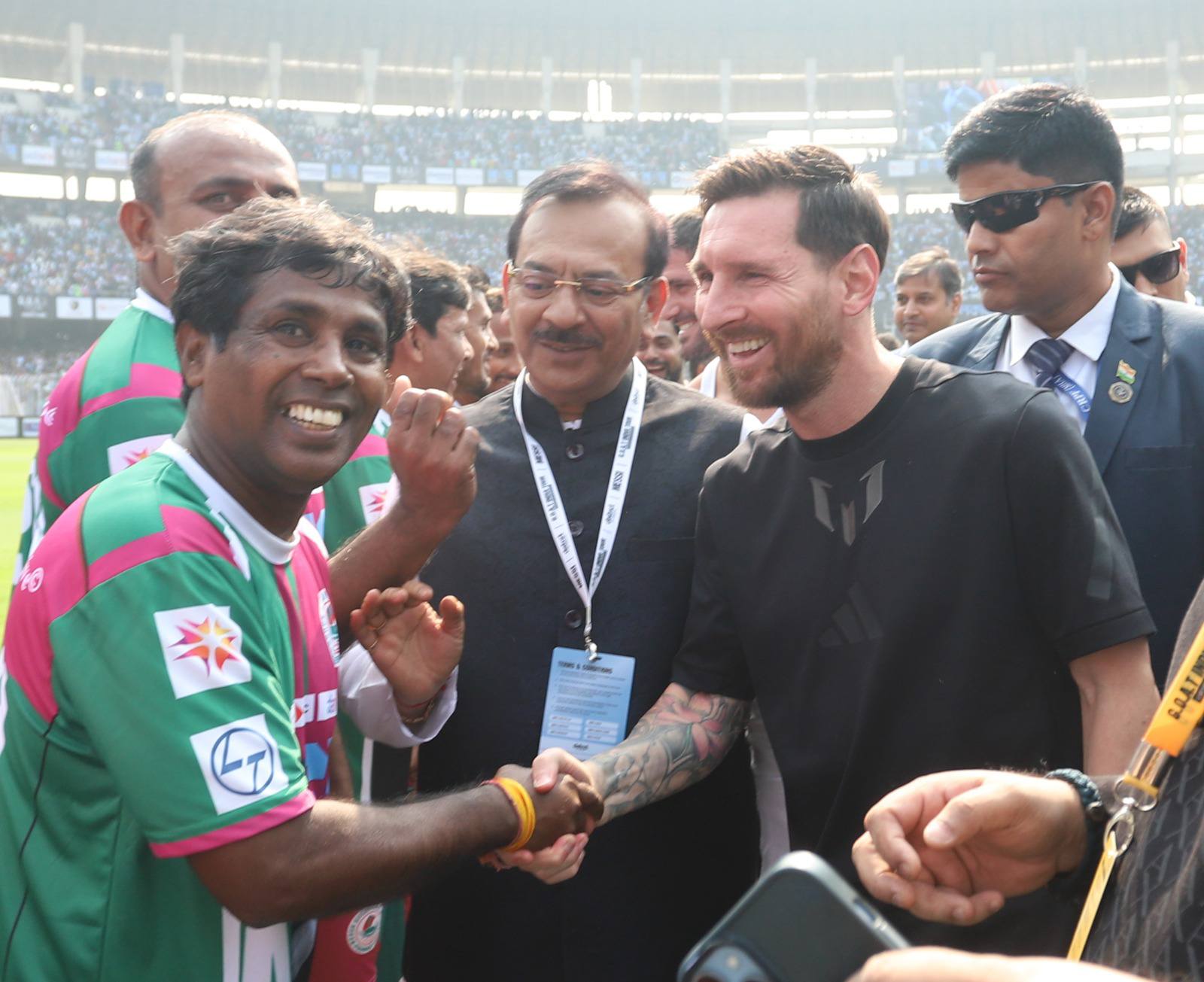
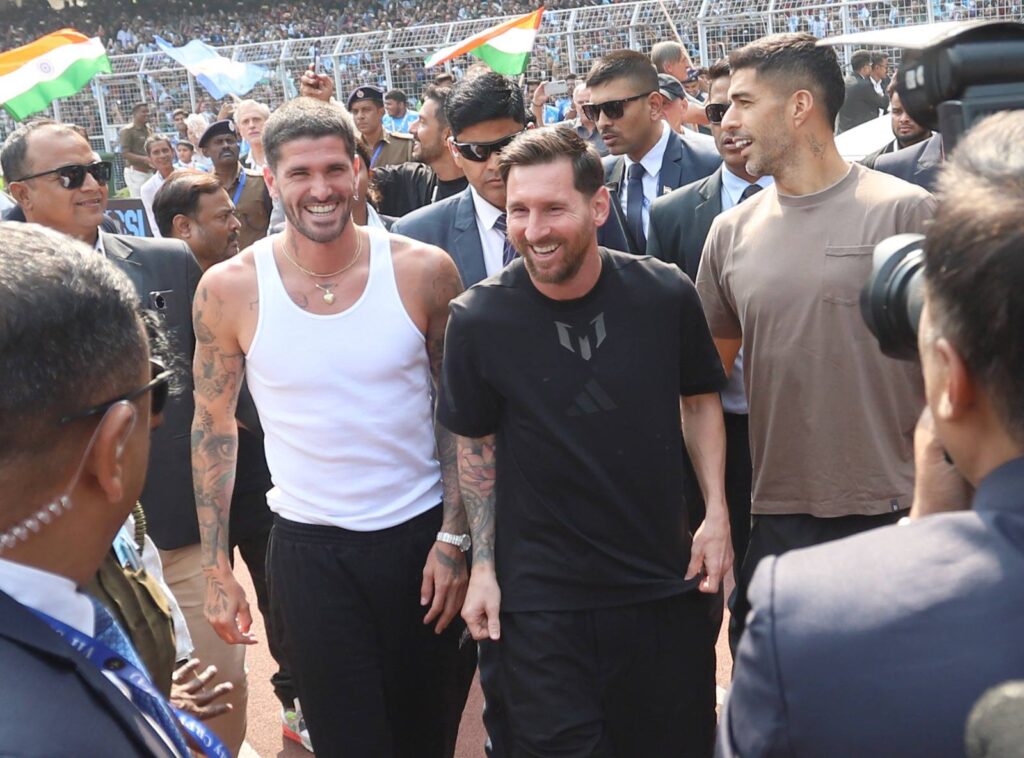
DOHA: Lionel Messi’s recent visit to India was never about football development — it was business. Yet, the spectacle surrounding his arrival has once again exposed the deep flaws in India’s football ecosystem, drawing criticism from global media and raising uncomfortable questions at home.
High-profile visits of global icons may generate headlines, but they do little to shape the future of Indian football. Draping Messi in a ceremonial shawl, making him jog briefly on a pitch, or even unveiling a giant statue will not change the sport’s fortunes in the country. Symbolism cannot replace substance.
What Indian football needs is not celebrity appearances, but structured, job-oriented grassroots programmes. Players require financial security, family support systems and clear career pathways. Instead, many remain at the mercy of a deeply flawed and often corrupt administrative structure, where assurances rarely translate into action.
Political Passion Doesn’t Guarantee Results
Political passion alone does not deliver results. A chief minister claiming to be a football enthusiast guarantees nothing. Even at the national level, Indian football chief Kalyan Chaubey has often spoken about his love for the game. Yet results on the pitch tell a different story. India’s defeat to Bangladesh, which shut the door on Asian Cup qualification, is a stark reminder of the gap between intent and execution.
This persistent underperformance has driven sponsors and supporters away. Many have shifted their attention to cricket or returned to hockey — a sport that has regained lost ground with back-to-back Olympic bronze medals in 2020 and 2024. Football, meanwhile, survives largely on discussion and distant dreams.
Despite the emergence of multiple academies across the country — including FIFA-supported initiatives such as the AIFF-FIFA Talent Academy in Bhubaneswar and the FIFA Talent Academy in Hyderabad — tangible results remain elusive. Promises are made, but the national team pipeline continues to run dry.
India’s football narrative is still anchored to a glorious but distant past. Decades have passed since the country last won an Asian Games gold medal, and even a podium finish at the Asian Cup feels like a fading aspiration. The All India Football Federation’s website proudly highlights the “golden era” of the 1950s and early 1960s under coach Syed Abdul Rahim — a period that modern Indian football scarcely resembles.
Most of those legends are no longer alive to tell their stories. Yet administrators continue to lean on history rather than build a future.
Leadership, Ambition and Conflicted Priorities
Concerns have also grown around leadership priorities. The current AIFF president appears increasingly ambitious, juggling administrative authority with political aspirations. During election seasons, the football jersey is replaced by political attire, as focus shifts from governance to vote banks. The role has evolved from safeguarding the game to controlling the system.
Indian football does not lack passion or history. What it lacks is accountability, vision and player-first governance. Until those fundamentals change, no superstar visit — no matter how iconic — will be enough to revive the beautiful game in India.






Fantastic writeup Amin Ul Islam you have written the 100 percent true facts of Indian football officials and administration. You are a genius and have immense knowledge of football I am very happy and will share your post to my near and dear ones